Senior Product Leader · Atlanta, GA
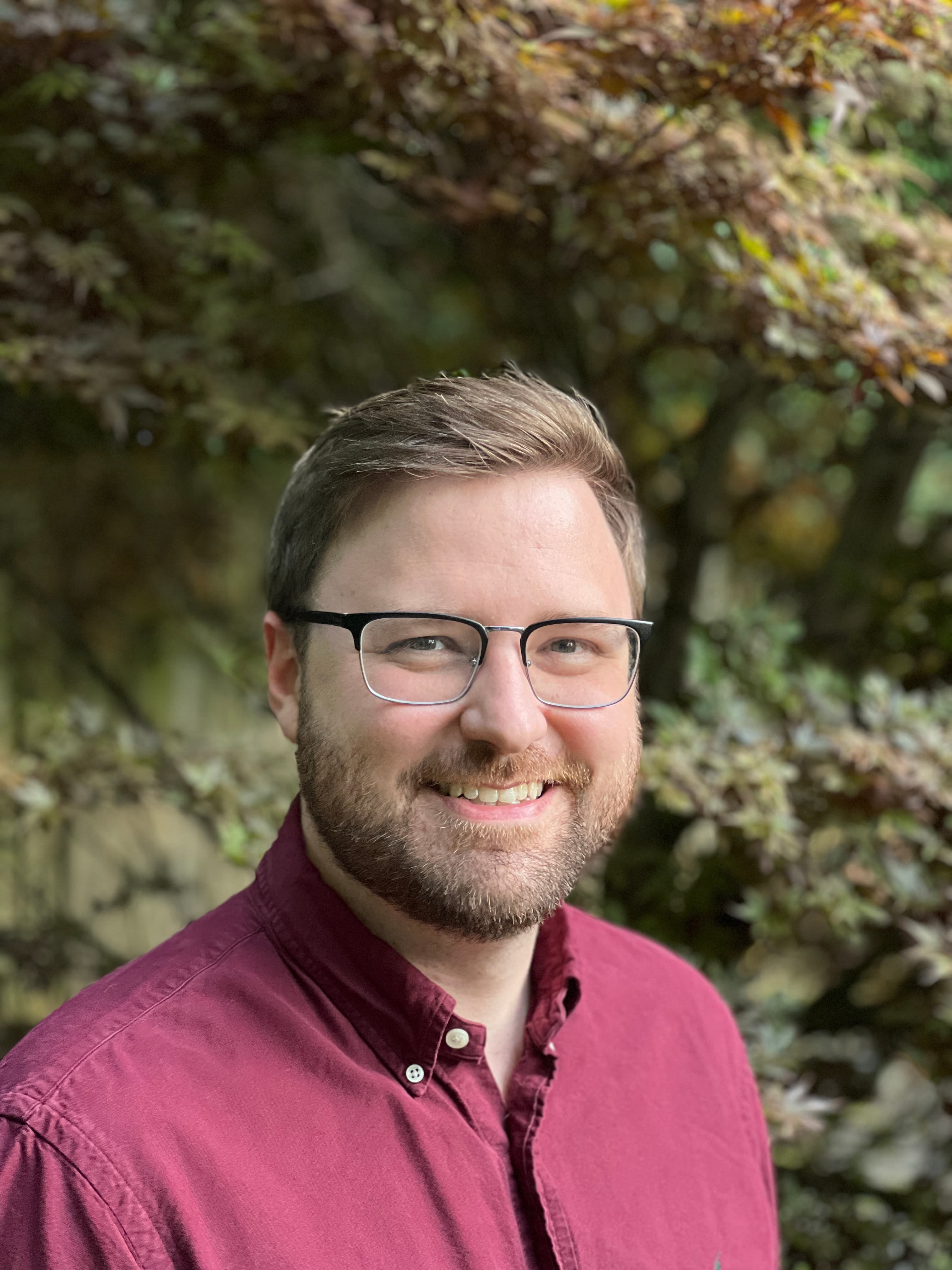
Cole Downing
I’ve taken products from zero to revenue in some of the hardest environments to ship in — Fortune 500 bureaucracies, federal health systems, and high-growth startups moving too fast to think. Ten years. $100M+ in collective ACV. The hard part was never the building. It was knowing what to build.
0+
Years in PM
0
Products 0→1
0
Fortune 500s
0
Person Team Led
0
State Health Depts Served
0
Countries Expanded
0K+
Customers Impacted
$0M+
In Collective ACV
About
Product leader. Systems thinker.
Most AI products fail not because the technology doesn’t work, but because the strategy is wrong from the start. I’ve spent ten years learning to tell the difference — at Salesforce, inside federal public health systems, and at high-growth startups where speed was the only competitive advantage.
My background in Cognitive Science isn’t a footnote. It’s how I think about product. Human behavior is predictable if you study it correctly, and the best AI products are the ones designed around how people actually make decisions — not how we wish they did.
I don’t just set strategy. I write the requirements, work the design, and stay close to the code. The products I’m most proud of are the ones where nobody could tell where the PM stopped and the product began.
Currently shipping two independent projects: Mission Control, an AI agent harness for non-technical builders; and Grail, an AI productivity and self-development app.
Education
A.B. in Cognitive Science
University of Georgia · 2015
Certificate of Computing
University of Georgia · 2015
Certifications
Machine Learning Product Management Specialization
Duke University · In Progress
Product Owner Certification
Salesforce · 2020
Awards
Certificate of Recognition: CDC (CSELS)
Centers for Disease Control and Prevention · 2018
Experience
10 years of impact.
Seamless.AI
January 2024 – Present
Senior Product Manager (Principal-Level Scope)
- —Own end-to-end strategy, execution, and go-to-market for Seamless.AI’s Agentic AI platform — a fully automated outbound sales workflow handling lead discovery, list building, campaign creation, and hyper-personalized LLM-generated outreach through an AI agent orchestration layer.
- —Driving the 2026 company-wide AI roadmap across Connect and the Agentic platform, leading three scrum teams and owning all strategic bets, prioritization, and GTM sequencing.
- —Spearheaded MVP development across three cross-functional teams to launch Seamless Connect in Q1 2025 — product has activated approximately a third of monthly active users, with a projected $50M ARR revenue opportunity.
- —Partner with legal and cross-functional stakeholders to evaluate AI models and outputs, establishing guardrails, ethical guidelines, and compliance frameworks for responsible AI at scale.
Salesforce
April 2019 – January 2024
Product Manager
- —Part of the product team that launched Sales Performance Management 0→1 — crafted a 9-month MVP roadmap integrating generative and predictive AI features, one of the earliest enterprise SaaS teams to do so.
- —Supported Territory Planning and Salesforce Maps — owned backend data infrastructure and drove global expansion across 255 countries, expanding TAM by $10M in two months.
- —Owned product roadmap and maintenance of backend data infrastructure for two products with ACV over $50M.
Centers for Disease Control / General Dynamics IT
September 2016 – April 2019
Product Owner (Software Engineer)
- —Reduced disease surveillance value set publishing from 3 days to 1 hour — enabling all 50 state health departments to receive updated reporting guidance the same day it was issued, critical during Ebola and Zika response.
- —Managed product roadmap and strategy for multiple CDC systems throughout the product lifecycle.
- —Reduced known bugs by 75% through systematic troubleshooting across SQL, Java, and front-end systems.
Centers for Disease Control / CGI Federal
May 2015 – September 2016
Technical Business Analyst
- —Facilitated adoption of advanced process optimization solutions for CDC stakeholders.
- —Executed root cause analysis across 7 mission-critical systems.
- —Translated complex technical requirements into actionable documentation for cross-functional teams.
Selected Work
Things I've built.
Professional Work
Seamless Connect
ActiveSeamless.AI · Founding PM
Expanding a lead generation tool into a full sales engagement platform. Founding PM across 3 scrum teams with full ownership from strategy through launch.
Launched Q1 2025 · ~1/3 MAU activated · Significant ARR driver
The Problem
Seamless had a clear wedge — it was one of the best tools in the market for finding leads. But that wedge had a ceiling. Customers would pull their data, export it, and immediately leave to run their outreach in a separate system. The workflow was broken at the seam. Every sale ended with a handoff to a competitor.
What I Did
I joined as the founding PM with a mandate to expand the platform into sales engagement — email, calling, social, activity tracking, and automated campaigns. With a six-month runway to MVP, I made the call to launch the basics first and layer on AI and automation in phase two. No over-engineering the first version.
We launched an early beta with roughly equal investment in email and calling. Usage data immediately told a different story: roughly 80% of users were using email exclusively. Rather than preserve roadmap symmetry, I pushed to fully build out the email runway first and defer calling. We went deep on one thing instead of thin on two.
The Chrome extension was also a key unlock — we moved from the old extension format to the Google sidebar model, giving users a more seamless in-context experience that let them engage from anywhere on the web without breaking their workflow.
The Outcome
Connect activated roughly a third of Seamless’s monthly active users and is projected to become a significant ARR driver for the business. More importantly, it reframed what Seamless is: a platform that takes a customer from lead discovery through execution, rather than a data tool that hands off to competitors at the critical moment.
Agentic AI Platform
ActiveSeamless.AI · Lead PM
Building the automation layer across the full sales stack. Natural extension of Connect with a cross-platform mandate.
Driving 2026 company-wide AI roadmap
The Problem
Connect proved that users wanted an integrated sales workflow. The next question was harder: could the platform execute that workflow autonomously? Sales teams were still making dozens of manual decisions per day — building lists, selecting contacts, sequencing outreach, categorizing leads. The work was repetitive, high-volume, and exactly the kind of task an agent should own.
What I Did
I extended my mandate from Connect into the Agentic AI platform — a layer spanning the full stack from lead generation through engagement through analytics. The organizational challenge was as hard as the product challenge: we had essentially no native AI in the platform, and I was driving a roadmap that would make AI the primary surface for most user workflows.
That meant building internal conviction before building product. I led competitive research, defined the agent architecture with engineering, and structured a phased rollout that showed leadership what customers could do at each stage — not just where we’d end up. The goal: a system where an agent could find leads, build lists, create campaigns, and fire personalized outreach with minimal human intervention.
The Outcome
The company-wide AI roadmap is active and in execution. The strategic bet — that AI-native automation is the core differentiator for the next generation of sales platforms — is now Seamless’s primary product thesis.
Sales Performance Management
Salesforce · Founding PM (one of three)
Founding a new enterprise product in one of the most complex categories in CRM. 0→1 from whiteboard through launch.
0→1 launch · Multi-billion dollar market opportunity
The Problem
Large enterprises were managing territory assignment, quota planning, and budget allocation in a patchwork of specialized tools and spreadsheets. The category wasn’t new — but the incumbent solutions were either too complex, too siloed, or both. Salesforce’s bet was that an all-in-one, less intimidating platform built natively on CRM data could own this space.
What I Did
I was one of three founding PMs on the product, involved from the first whiteboard session through launch — hypothesis validation, requirements, design collaboration, and execution across engineering teams. The core MVP bet was territory planning and quota allocation, the highest-pain workflows in the category.
Two things made this hard. We hit a leadership transition at roughly the midpoint of the roadmap, which required rebuilding alignment without losing execution momentum. I also conducted R&D on generative and predictive AI features at a time when enterprise SaaS was only beginning to take AI seriously — knowing when to stop researching and ship was itself a judgment call.
The Outcome
SPM launched as a new Salesforce product line addressing a multi-billion dollar market opportunity. The territory planning core became the foundation the team continued building on after my tenure.
Territory Planning
Salesforce · Data PM
Taking Territory Planning from a handful of countries to 255, opening international markets that had been structurally inaccessible.
$10M TAM expansion in 2 months
The Problem
Territory Planning was built on raster-based geographic data — an older format that lacked the granularity for complex territory modeling and only supported a small subset of countries. Enterprise customers in international markets couldn’t use the product. The technology constraint was also a revenue constraint.
What I Did
I ran the data team responsible for both Salesforce Maps and Territory Planning. The project required more than sourcing new geographic data — it required rearchitecting the data layer. We migrated from raster to vector format, built internal ETL pipelines to process and validate new data sources, and designed a data-agnostic ID system so the infrastructure could serve both products without tight coupling to either.
The hypothesis was straightforward: there was demand we couldn’t capture because we didn’t exist in those markets. Getting the data correctly and quickly was the only unlock.
The Outcome
Coverage expanded to 255 countries, opening international markets that had been structurally inaccessible. The TAM expansion was measurable within two months of launch.
Salesforce Maps
Salesforce · Data PM
Transformed a single database into a full enterprise-grade backend data architecture — three environments, automated ETL pipelines, automated data fetching, deployment processes, and DB unit testing. Added 20+ new data sources for the sales mapping tool.
ACV over $50M · Data-agnostic architecture
The Problem
Salesforce Maps relied on a tightly coupled, source-dependent backend — a single database without proper environment separation, automated pipelines, or the flexibility to onboard new data providers. Every new data source required custom integration work, and the architecture couldn’t scale to meet enterprise demands for coverage and reliability.
What I Did
I took what was essentially one database and built it into a full-blown enterprise-level backend data architecture. That meant standing up three environments, building automated ETL processes and scripts to fetch, download, transform, and load data, creating deployment processes to push to production, and adding unit testing on the database layer.
The biggest accomplishment was moving from a source-dependent backend to a data-agnostic one. I redesigned the data architecture and schemas to support our own custom unique identifiers, which meant we could ingest data from any provider without rewriting integration logic. That unlock let us add over 20 new data sources for the mapping tool.
The Outcome
The data infrastructure went from fragile and source-locked to a scalable, data-agnostic platform supporting tens of thousands of enterprise customers. The architecture served both Salesforce Maps and Territory Planning with combined ACV exceeding $50M.
Disease Surveillance Infrastructure
CDC / General Dynamics IT · Product Owner
Reducing value set publishing time from 3 days to 1 hour across 50 state health departments during active epidemic response.
72× faster — 3 days → 1 hour
The Problem
When epidemiologists needed to update disease reporting guidance — the standardized value sets that define how conditions are classified and reported — those changes had to reach all 50 state health departments quickly and correctly. During Ebola and Zika response, this wasn’t an academic concern. If a state was reporting against outdated value sets, the data flowing back to the CDC was incomplete or miscategorized. The pipeline that distributed these updates was slow by design. A business analyst would manually update value sets through a GUI, then wait for scheduled overnight jobs to promote changes through development, staging, and production environments. At best, the process took three days. In an active outbreak, three days is a long time to be reporting incorrectly.
What I Did
I learned the system end-to-end — both the product surface and the backend architecture — and identified that the bottleneck wasn’t just slow process, it was structural dependency on legacy scheduled jobs and a fragile GUI layer. Working with the dev team, I designed an alternative path: a workflow that took updates from a spreadsheet directly to a database, validated through automated unit testing, and deployed to staging and production without touching the old GUI or waiting for overnight jobs.
The government contractor environment made this harder than it sounds. Zero margin for error, strict compliance requirements, and a culture that moved carefully by design. Building the case for a new deployment path required both technical credibility and stakeholder trust across CDC program managers and the dev team.
The Outcome
Value set publishing time dropped from three days to one hour, distributed across all 50 state departments of health. During active Ebola and Zika response, that meant updated surveillance guidance could be in the hands of state reporters within the same workday — and the data flowing back to the CDC reflected it.
Independent Projects
Mission Control
Solo builder · Product, design, and architecture
A Kanban-style agent team for non-technical builders. Replaces the OpenClaw gateway with a project planning interface where users manage a team of AI agents like a Trello board — no code required.
In development · Targeting Summer 2026 launch
The Problem
OpenClaw is one of the most powerful open-source AI agent platforms available — but it’s built for developers. Non-technical users who want to use it to actually build things hit a wall immediately. The setup requires Docker, Python environments, and careful sandboxing. The interface assumes technical fluency. And breaking a large, ambiguous project into discrete agent tasks — the core skill required to get anything useful done — requires a mental model most non-technical users don’t have yet. Small business owners who want to build tools with AI shouldn’t need to know what a gateway is. They should be able to describe what they want and have a system figure out how to build it.
What I Did
Mission Control replaces the OpenClaw gateway with a Kanban-style project planning interface designed for non-technical users. Instead of configuring agents manually, users build a team — a product agent, a CEO agent, developer agents, a QA agent, and a security agent — each with a defined specialty, functioning as a real software development team.
The system takes a large project goal, breaks it into manageable phases and tasks automatically, assigns work to the right agents, and executes. The user manages it like a Trello board — they see what’s planned, what’s in progress, and what’s done. They don’t need to understand what’s happening underneath to direct it.
The core design principle: the interface should feel like managing a team, not operating software. A small business owner who has never written a line of code should be able to open Mission Control, describe a tool they need, and watch a team of agents build it.
The Outcome
Working locally. Targeting a public launch in Summer 2026. The core agent team architecture and project breakdown engine are functional. Current focus is on the user-facing planning interface and making the agent handoff logic reliable enough for non-technical users to trust.
Grail
Solo builder · Product, design, and architecture
A productivity and self-development app built around how you actually live. Unifies tasks, reminders, calendar, and AI-guided self-reflection into a single experience organized around flows — your morning, your work, your evening.
In development · Targeting Summer 2026 launch
The Problem
Most productivity apps treat your day as a flat list. Tasks sit next to each other with no sense of context, energy, or timing. Your 9am and your 9pm are the same surface. Your work self and your personal self share a single undifferentiated inbox. The result is a tool that captures everything and helps you understand nothing. Self-help apps have the opposite problem — they’re rich with reflection and insight but disconnected from the actual shape of your day. You journal in one place, plan in another, and neither talks to the other.
What I Did
Grail unifies tasks, reminders, calendar, and self-reflection into a single experience organized around how you actually live. The core structural idea is flows — your morning, your afternoon, your evening, your work — each treated as a distinct context with its own rhythm and energy. A task that belongs in your morning flow doesn’t appear in your work flow. Your schedule isn’t a grid; it’s a day with shape.
Layered on top of that structure is the self-development layer. Grail surfaces AI-guided reflections — insights about your patterns, your challenges, your goals, and your behavior — and learns from how you respond. Over time it builds a model of you: what drains you, what energizes you, where you consistently underestimate or overcommit. That model feeds back into how it helps you plan and prioritize, so the system gets more useful the longer you use it.
The bet is that the most useful productivity tool isn’t the one that captures the most — it’s the one that understands you well enough to help you make better decisions about your own time.
The Outcome
Live and working locally. The flows architecture, task and calendar integration, and AI reflection engine are all functional. Targeting a public launch in Summer 2026.
Expertise
What I bring.
0→1 Product Development
I’ve founded three separate products from whiteboard to launch, each in a different company and context.
Agentic AI Systems
Currently building the automation layer for a full sales platform. I understand agent architecture, not just the pitch.
Platform Strategy
I think in systems. My best work connects infrastructure decisions to business outcomes executives can act on.
Data Infrastructure
From raster-to-vector migrations at Salesforce to ETL pipeline design, I’m comfortable owning the data layer.
Discovery & Validation
I run structured discovery before building. I know the difference between polite enthusiasm and real willingness to pay.
Cross-functional Leadership
I’ve led teams of 28, run three scrum teams simultaneously, and partnered with legal, engineering, and executive leadership across every role.
Recommendations
What people say.
Cole brings a rare combination of strategic thinking and execution discipline. He doesn’t just manage products—he understands the business context, anticipates downstream impacts, and drives clarity across complex, cross-functional initiatives. His ability to break down ambiguous problems, align stakeholders, and move teams forward with confidence is what sets him apart.
“I would highly recommend Cole for any Principal or Staff-level product role. He is the kind of leader you can rely on to step into complexity, create structure, and deliver meaningful results.”
Van Nguyen
Senior IT Leader · Managed Cole directly at the CDC
I had the pleasure of working with Cole as Product Designer during the early days of Seamless Connect, and I can honestly say he’s one of the best PMs I’ve collaborated with. Building something from zero can be messy by nature as there were no existing patterns to lean on, and decisions happen fast. Cole made the process feel grounded and very human.
“What we built together in those early stages became the foundation Seamless Connect was built on. I’d jump at the chance to work with Cole again!”
Danielle Joseph
Head of Design / Brand & Product · Worked on the same team at Seamless.AI
I worked closely with Cole across our Maps and Territory Planning teams during a critical Salesforce initiative. He led the complex raster-to-vector migration with a steady hand orchestrating the ETL pipeline work while keeping data integrity front and center, even under pressure.
“He’s the kind of leader who brings clarity and calm to challenging situations. I’d gladly work with him again.”
Tamanna Goware
Management Consultant · Cole was senior to Tamanna at Salesforce
Contact
Let’s talk.
I’m looking for the next hard problem — ideally at a company building AI infrastructure, developer tooling, or a platform that’s trying to own a category. If that’s you, let’s talk.